3-Tab vs. Architectural Shingles: What's the Difference?
By the Ajax Roofing team · November 19, 2026 · 6 min read
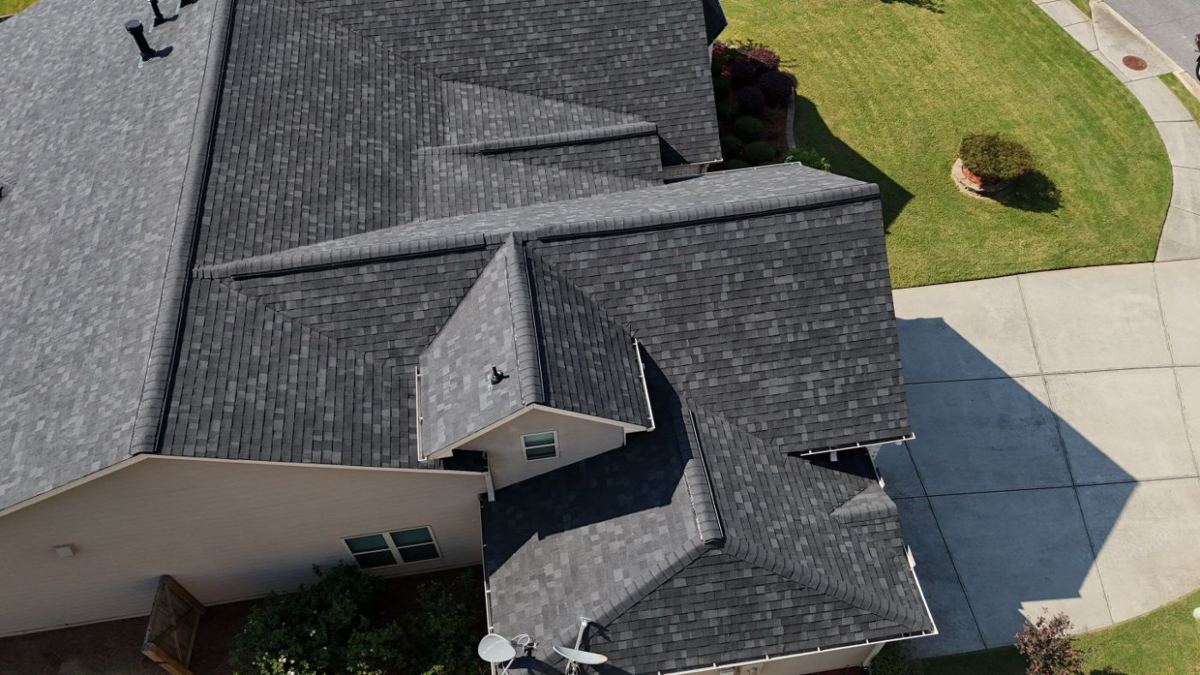
If you're getting quotes for a new roof, you'll probably see two kinds of asphalt shingles: 3-tab and architectural (sometimes called dimensional or laminated). They're made from the same basic materials, but they're built differently, and that difference shows up in how long they last, how they handle wind, and how your home looks from the street.
Here's a plain-English breakdown from a roofing crew that installs both across north Georgia.
The short answer
For most homes, architectural shingles are the better buy. They're thicker, handle much higher winds, last years longer, and carry far better warranties, and the price difference is smaller than most people think. A 3-tab shingle is a reasonable, cost-effective choice if you don't plan to be in the house more than 5 to 10 years.
Our take
“We do still install 3-tab. It's a lower quality shingle, but it's a cost-effective solution, and the savings usually aren't as big as people expect. Where it makes sense is when a homeowner doesn't think they'll be in the house more than 5 to 10 years and doesn't want to pay the small premium for an architectural shingle. Keep in mind that manufacturers often rate 3-tab for 20 to 25 years, but in practice, a 3-tab roof that's 14 years or older has usually taken some damage and will need repairs soon. Architectural shingles are mostly rated for 130 mph winds, so they rarely see wind damage. Hail is really their main threat.”
What is a 3-tab shingle?
A 3-tab shingle is a single, flat layer of asphalt with two cutouts along the bottom edge, which makes each strip look like three separate tabs. Once installed, the roof has a uniform, flat, brick-like pattern.
For decades 3-tab was the standard builder-grade shingle, which is why you'll still see it on a lot of homes built in the 1980s, '90s, and early 2000s. Today, fewer manufacturers make them, and the ones that do offer fewer colors.
What is an architectural shingle?
An architectural shingle is made of two or more layers of asphalt laminated together. The layers are cut in different shapes, so the finished roof has depth and shadow lines that look more like wood shakes or slate.
Because they're thicker and heavier, architectural shingles are tougher in wind and hail, and they've become the standard choice for roof replacements on most homes in metro Atlanta.
Side-by-side comparison
Ratings vary by brand and product line, so always check the specific shingle on your quote. For example, Owens Corning's Duration line is eligible for wind coverage up to 160 mph when installed with the required Owens Corning components.
| 3-Tab | Architectural | |
|---|---|---|
| Construction | Single flat layer | Two or more laminated layers |
| Look | Flat, uniform pattern | Dimensional, shadowed, shake-like |
| Typical wind rating | About 60–70 mph | Most rated to 130 mph; some lines higher with special installation |
| Manufacturer-rated life | Often 20–25 years | Often 30 years to limited lifetime |
| Real-world life in Georgia | Usually needs repairs by about year 14 | Roughly 25–30+ years |
| Manufacturer warranty | Usually 20–25 year limited | Often limited lifetime |
| Weight | Lighter | Heavier and about 50% thicker |
| Upfront cost | Lowest | Higher, but usually a modest difference on a full replacement |
Why the wind rating matters in north Georgia
Spring and summer storms here regularly bring gusts that can lift and crease the flat tabs on a 3-tab roof. Once a shingle's seal breaks, it's much more likely to blow off in the next storm, and that's how small wind damage turns into leaks. It's a big reason why, in our experience, a 3-tab roof that's 14 years or older has usually sustained some damage and will need repairs soon, even though manufacturers often rate them for 20 to 25 years.
Most architectural shingles are rated for 130 mph winds, so they rarely suffer wind damage. Their main exposure is hail. If you've had shingles blow off before, that alone is a good reason to upgrade. See our page on storm and hail damage for what each kind of damage looks like.
Is the extra cost worth it?
On a full replacement, most of the cost is labor, tear-off, underlayment, flashing, and disposal, which are the same no matter which shingle goes on top. The difference in shingle price is usually a small share of the total job.
In our experience the premium for architectural is not as much as people think. When you spread that difference over the extra years of life you get, architectural shingles almost always come out ahead, and they tend to help resale value since buyers notice a dimensional roof.
When a 3-tab shingle still makes sense
We still install 3-tab roofs when they're the right fit. The most common situations:
- ✓You plan to move within 5 to 10 years and don't want to pay the small premium for architectural
- ✓You're repairing a small section of an existing 3-tab roof and need it to match
- ✓It's a rental or flip where upfront cost is the main priority
- ✓A shed, detached garage, or outbuilding where looks and lifespan matter less
What about insurance claims?
If your 3-tab roof is damaged by a storm and your claim is approved, your policy typically pays to replace it with a comparable product. Because 3-tab shingles are harder to find and match, many homeowners upgrade to architectural during an insurance replacement and pay any small difference themselves. We'll walk you through the numbers before anything is ordered. Learn more about our insurance claim help.
Frequently Asked Questions
Can you mix 3-tab and architectural shingles on the same roof?
It's possible on separate roof sections, but they look very different side by side. For a full roof, we recommend sticking with one type.
How long does a 3-tab roof really last?
Manufacturers often rate 3-tab shingles for 20 to 25 years. In practice, we find that most 3-tab roofs 14 years or older have sustained some damage and will need repairs soon.
How can I tell which shingles I have now?
Look at the roof from the street. If it's flat with a regular, repeating pattern of rectangles, it's likely 3-tab. If it has depth, shadows, and an irregular pattern, it's architectural. We'll confirm during a free inspection.
Are 3-tab shingles being discontinued?
Some manufacturers have cut back or stopped making 3-tab shingles, and the ones still made come in fewer colors. That's one reason matching an older 3-tab roof can be difficult.
Do architectural shingles need special installation?
They install much like 3-tab, but higher wind ratings often require specific starter strips, nailing patterns, and matching ridge caps from the same manufacturer. That's why the installer matters as much as the shingle.
Not sure what your roof needs?
Get a free, no-pressure inspection with photos of everything we find. We serve homeowners across Forsyth, Hall, Gwinnett, Fulton, Cherokee, Cobb, and DeKalb counties.